









Trauma can leave impressions far beyond the experience in which it originated. It can influence the body, breath, mind, behaviour, relationships, choices, identity and even our capacity to trust, heal and engage meaningfully with life.
For the Viniyoga Therapist, understanding trauma therefore requires more than recognising symptoms or learning a collection of techniques. It requires the ability to understand how trauma becomes established within the human system, how its effects spread, what may prevent healing, and how therapeutic intervention must be carefully adapted to the individual.
Many trauma-informed Yoga trainings focus primarily on helping practitioners make Yoga safer and more accessible for people affected by trauma. This programme goes further. It trains already-qualified Viniyoga Therapists to understand trauma itself through the multidimensional frameworks of Yoga and Ayurveda, trace its many tentacles through the person's life, recognise the spiritual obstacles it may create, and develop individualised therapeutic responses with appropriate timing, discernment and care.
The Viniyoga® Therapy Specialisation in Trauma is an advanced professional training offered to graduates of the Viniyoga® Therapy Training as Continuing Education and specialised studies.
Participants will already be familiar with the foundational models and therapeutic principles of Viniyoga. These will not simply be repeated. Instead, the training will explore their advanced application specifically in relation to trauma, integrating the perspectives of Yoga and Ayurveda with therapeutic observation, experiential practice, case discussion and personal reflection.
The training consists of four seven-day modules, following a deliberate progression from recognising trauma to tracing its consequences, supporting transformation, and developing the maturity necessary to accompany another person's healing responsibly.
LEARNING OUTCOMES
Develop an advanced understanding of the Yogic and Ayurvedic anatomy, pathology, causes and manifestations of trauma.
Recognise how unresolved trauma extends its tentacles into the body, breath, mind, behaviour, relationships, identity, choices and Dharma.
Understand the spiritual dimensions of trauma, including resistance to healing, loss of trust, spiritual bypassing and trauma-driven patterns that may masquerade as clarity.
Apply Viniyoga tools with greater krama, discernment and individualisation, including knowing when to adapt, postpone or avoid particular interventions.
Cultivate the maturity required of a Trauma Care Provider through compassionate presence, appropriate boundaries, self-awareness, therapeutic humility and responsible care.
DATES
Module 01 - 08 - 14 March 2027
Module 02 - 16 - 22 August 2027
Module 03 - Feb/Mar 2028 - Precise dates to be confirmed in 2027
Module 04 - Aug 2028 - Precise dates to be confirmed in 2027
Participation will be limited, so please apply early!
VENUE
The training program will be conducted at:
Mitra ASBL, Place Flagey 7, 1050 Ixelles, Brussels, Belgium
More Information:
For any additional enquiries, kindly contact our local coordinator, Philip Rigo
email: philip@mitra-yoga.be Mobile : +32 474 20 30 29
WHO SHOULD APPLY?
This specialised programme is offered as Continuing Education and Advanced Specialised Studies for Viniyoga Therapists.
Participation is intended primarily for those who have completed the Viniyoga® Therapy Training and already possess a sound foundation in the principles, methods and professional application of individualised Viniyoga Therapy.
The programme assumes familiarity with the fundamental therapeutic models and tools of the Viniyoga tradition and will build upon them specifically in the context of trauma.
To facilitate deeper discussions, healing experiences and transformation in a safe space, we are choosing this format so that there is Satsaṅga to hold space for everyone.
To support continual growth, the training incorporates simple, regular assignments — both written reflections and practical explorations — that guide you in absorbing the teachings deeply and identifying areas for evolution.
As a participant, you will also gain exclusive access to our comprehensive online resource centre, filled with study materials, handouts, and class audio recordings.
A Certificate of Participation will be issued to all those who complete the four modules.
COURSE FEE
Payment to be made in four instalments of €795 per instalment.
Payments can be made via Bank Transfer (IBAN) or Credit Card. All Credit Card payments will be charged in Singapore Dollars only. Chinese clients can also pay using Alipay or WeChat Pay. An additional 5% transaction fee will be charged for all credit card, Alipay, or WeChat payments.
Payments can also be made in other currencies through Bank Transfer - Singapore $ | British £ | Australian $ | New Zealand $
This is the cost of Tuition only. It does not include additional Fees for Private Mentoring, Boarding and lodging for the offline modules, nor does it include travel costs to and from the venue of these modules. The Payment schedule will be made clear in the acceptance letter.
Enrolment Information
Fill up the online registration form by clicking the link below. Our office will process your application and send you an acceptance letter further instructions on how to confirm your application. Once the acceptance fee is paid, your participation is confirmed in the training.
MODULE ONE | RECOGNISE
The Yogic Anatomy and Pathology of Trauma
Recognition, Origins and Causes
The first module examines how trauma may be understood through the advanced perspectives of Yoga and Ayurveda. Participants will explore how traumatic experiences become established within different dimensions of the human system and why apparently similar experiences may affect individuals in very different ways.
Core areas of study include:
Trauma through the advanced application of pañcamaya, prāṇa, guṇa and cakra
Trauma and the interaction of smṛti, saṁskāra and vāsanā
The relevance of the kleśa-s in understanding traumatic patterns
Rakta-bīja as a model for recurring and self-replicating trauma
Ayurvedic perspectives on constitution, disturbance and resilience
Developmental, relational, collective and transgenerational trauma
Karma and inherited patterns
Recognising trauma through body, breath, behaviour, relationships and energetic presentation
A fundamental principle will guide the module: Observation must precede interpretation.
MODULE TWO — TRACE
The Trauma Tentacles
How Unresolved Trauma Spreads Through the Human System
Trauma rarely remains confined to the original event. When unresolved, its tentacles may gradually reach into many dimensions of life. This module explores how trauma can influence physical health, sleep, emotions, behaviour, relationships, identity, decision-making and our ability to participate fully in life.
Core areas of study include:
Trauma and the body, breath and physical health
Trauma, sleep, nidrā and recurring patterns of memory
Emotional and behavioural expressions of unresolved trauma
Avoidance, control, perfectionism, dependency, withdrawal and other protective strategies
How protective behaviours can eventually reinforce traumatic saṁskāra-s
Trauma and relationships, boundaries, trust and belonging
Isolation and the healing role of appropriate relationship and Saṅga
Restoring agency, choice and participation in the healing process
Understanding how behavioural change can create new experiences and new patterns
A particularly important theme will be recognising when trauma begins to masquerade as Dharma.
The therapist must therefore learn to ask: Is this choice arising from clarity, or is the wound still making the decision?
MODULE THREE — TRANSFORM
The Spiritual Dimensions of Trauma
Resistance, Healing and Transformation
Trauma does not affect only the body and mind. It may also alter a person's relationship with trust, meaning, faith, surrender, spiritual practice and the Divine. This module explores the deeper psycho-spiritual dimensions of trauma, including one of the most important challenges in therapeutic work: resistance to healing.
Core areas of study include:
Why people may desire healing while simultaneously resisting change
Trauma as identity and attachment to protective patterns
Loss of trust, śraddhā and meaning
Spiritual and religious trauma
Spiritual bypassing and the misuse of Yoga teachings
Distinguishing genuine Īśvarapraṇidhāna from unhealthy submission
Abhyāsa and Vairāgya in the process of healing
Trauma as teacher without romanticising suffering
Behavioural transformation and the rediscovery of Dharma
Central to this module will be the advanced Viniyoga principle of krama — appropriate timing, sequencing and dosage.
Participants will explore the careful application of Āsana, Prāṇāyāma, Mantra, chanting, meditation, Bhāvana, visualisation, Mudrā and other Viniyoga tools, including circumstances in which particular practices may need to be modified, postponed or avoided.
The right tool given at the wrong stage can become the wrong intervention.
MODULE FOUR — ACCOMPANY
Caring for the Trauma Care Provider
Presence, Boundaries and Professional Responsibility
Working closely with trauma also affects the Care Provider. The therapist enters the therapeutic relationship with their own history, saṁskāra-s, vulnerabilities and expectations. Developing self-awareness and maintaining personal stability are therefore essential aspects of responsible trauma care.
Core areas of study include:
Compassionate and trauma-sensitive communication
Creating trust without encouraging dependency
Professional, personal, emotional and energetic boundaries
Projection, attachment, aversion and over-identification
Recognising rescue impulses and therapeutic ego
Secondary and vicarious traumatisation
Energetic sensitivity and traditional approaches to protection
Personal practice and svādhyāya as professional responsibilities
Recognising when not to go deeper
Knowing when less intervention is more appropriate
Īśvarapraṇidhāna and therapeutic humility
The Dharma of the Viniyoga Therapist
The Care Provider must learn to care deeply without assuming ownership of another person's healing.
We may accompany the process of healing, but we are not the source of healing.
Rooted in Viniyoga® Tradition from India
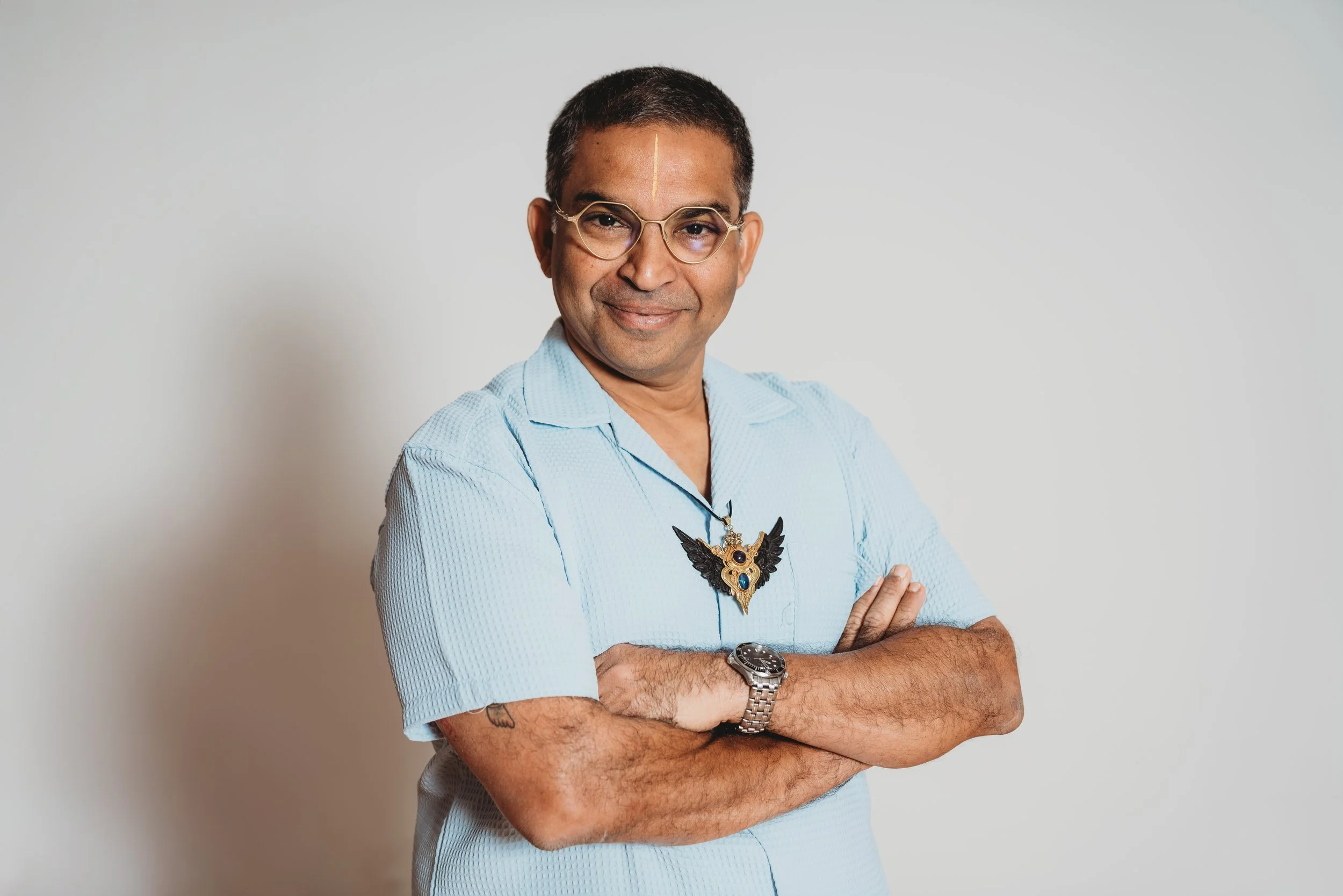
Deeply rooted in the rich yoga traditions of India, this training program offers an immersive experience into the profound teachings of Yogācārya T Krishnamacharya and his son, TKV Desikachar, who revolutionised Yoga by making it accessible to all. Their legacy, marked by a holistic approach, respects the individual's unique needs while using a wide spectrum of yogic tools far beyond āsanas.
Under the guidance of Dr. Kausthub Desikachar, the current lineage holder of the Viniyoga® tradition, you will gain unparalleled insight into Yoga's essence. Dr. Desikachar, a distinguished yoga therapist and healer, embodies the wisdom passed down from his ancestors. Moreover, his expertise spans the entire spectrum of yoga, including profound spiritual and therapeutic aspects. So, you can expect this training to be a holistic and deeply enriching learning experience.